mod soap
- module soap
SOAP power spectrum and Cartesian pullback through
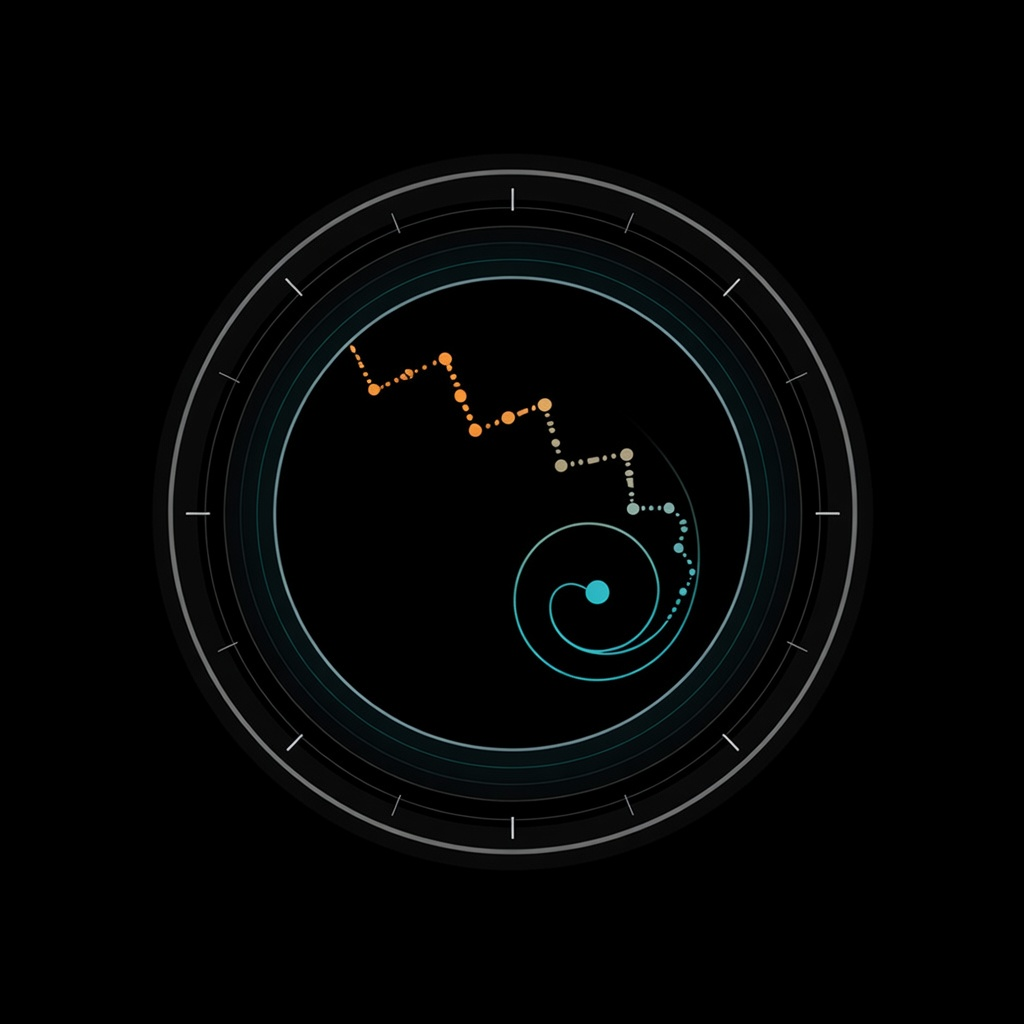
∂p/∂R. SOAP power spectrum and the Cartesian pullback through its Jacobian.Local fingerprints are per-atom power spectra
p_{nn'l}(i) = Σ_m c_{nlm}(i) c_{n'lm}(i)withc_{nlm}(i) = Σ_{j≠i} w_n(r_{ij}) Y_{lm}(hat r_{ij}). The map isR^{3N} → R^{N n_feat}. Its Jacobian is analytic: each pair contributes∂w/∂rand∂Y/∂r̂through the projector(I − r̂ r̂ᵀ)/r. Finite differences are not that map — they costO(N)SOAP evals, they jump at the cutoff, and a 24-D global average has rank at most 24 inR^{3N}, so it cannot see which atoms carry icosahedral versus fivefold-join environments.A residual step is a direction on the cloud of local spectra. The recommended hop is the observed-cloud residual
2p − μ, partitioned by observed atomic numbers and by the mobile mask. That is the same map on a Lennard-Jones cluster, a water cluster, and an adsorbate on a frozen slab: no CNA class, no fcc prototype. Frozen atoms stay in the neighbour list and do not move. When the cloud of a species is a Dirac the residual vanishes and SOAP yields rather than inventing a packing. The Cartesian step is the Tikhonov pullback of the stacked leftover[Δp; Δχ]through the stacked analytic Jacobian. Molecular steps are ambient Cartesian proposals by default, so the physical relaxation decides whether internal deformation survives. A rigid-group retraction is available as a diagnostic mode. The hop fingerprint is SOAP atl_max = 6plus the ACE ν=3 / λ-SOAP CG contraction of the same spherical expansion. Ih is silent in the power spectrum untill = 6. Surface coordination is SOFI/IRA (a length), not this map. The 555→421 / fcc-prototype residual is an oracle. Opt-in, cluster only.Functions
- fn class_masses(x: ArrayView1<f64>, spec: SoapSpec) -> [f64; 3]
Soft class masses
(m_555, m_421, m_422).
- fn class_residual_rms(x: ArrayView1<f64>, spec: SoapSpec) -> f64
RMS of 555-class SOAP toward the 421 target. O(1) on a Mackay ico.
- fn class_target(x: ArrayView1<f64>, spec: SoapSpec) -> Array1<f64>
Oracle target: 555 atoms toward 421 (occupied mean, else fcc prototype).
Invents a close-packed class when the observed cloud has none. Same class as a template reseed. Not the recommended hop.
- fn fivefold_axis_count(x: ArrayView1<f64>) -> usize
Number of candidate axes whose fivefold length is below
FIVEFOLD_AXIS.
- fn fivefold_axis_table(x: ArrayView1<f64>) -> Vec<([f64; 3], f64)>
Candidate axis and its fivefold length, best first.
- fn fivefold_length(x: ArrayView1<f64>) -> f64
Fivefold SOFI/greedy length of
xabout the best candidate axis.
- fn fivefold_probe(x: ArrayView1<f64>, rmsd: f64) -> FivefoldProbe
Probe the fivefold hop: length, residual concentration, gated yield.
- fn ih_dominated(x: ArrayView1<f64>, spec: SoapSpec) -> bool
True when the contact graph carries a substantial 555 (icosahedral) fraction.
Observation, not a hop target. Used to withhold Ih-preserving symmetrise. Does not name a destination packing.
- fn jacobian(x: ArrayView1<f64>, spec: SoapSpec) -> Array2<f64>
Analytic Jacobian of the stacked local spectra, shape
(N dim, 3N).
- fn jacobian_ace(x: ArrayView1<f64>, spec: SoapSpec, species: Option<&[u32]>) -> Array2<f64>
Analytic Jacobian of the ACE ν=3 block, shape
(N · nu3_feat, 3N).
- fn jacobian_fd(x: ArrayView1<f64>, spec: SoapSpec, eps: f64) -> Array2<f64>
Finite-difference Jacobian of the global average, test-only.
- fn jacobian_four(x: ArrayView1<f64>, spec: SoapSpec, species: Option<&[u32]>) -> Array2<f64>
Analytic Jacobian of the two 4-body triple invariants, shape
(N · nu3_dim, 3N).
- fn jacobian_nu3(x: ArrayView1<f64>, spec: SoapSpec, species: Option<&[u32]>) -> Array2<f64>
Stacked Jacobian of SOAP power spectrum and ACE ν=3 scalars.
- fn jacobian_z(x: ArrayView1<f64>, spec: SoapSpec, species: Option<&[u32]>) -> Array2<f64>
Analytic Jacobian of stacked local spectra, species channels included.
- fn kick_packing_nu3<R: Rng + ?Sized>(x: ArrayView1<f64>, spec: SoapSpec, rmsd: f64, species: Option<&[u32]>, mobile: Option<&[usize]>, rng: &mut R) -> Array1<f64>
Extra ArchiveHole in the DECAF packing feature, not SOAP leftover.
Packing identity is per-center
local_nu3_z(SOAP plus ACE (nu=3)). Leftover SOAP (p_i-mu) collapses across the paper funnels. ACE leftover on those rows stays finite on a closed shell. A packing-mean kick in the stacked map is species-aware and names no morphology. Universal MLIP features are this ACE basis plus learned mixing; occupancy Leave uses the invertible contractions, not an energy model’s last layer. The Leave quench invert (crate::known_basin) applies the dimer Householder to the same increment-on-every-center pullback (J_mu^{mathsf T} hat u_varphi).
- fn local_nu3(x: ArrayView1<f64>, spec: SoapSpec) -> Array2<f64>
SOAP power spectrum concatenated with the two 4-body triple invariants.
Three unit directions have three rotational invariants. Pairwise dots collapse into the SOAP l=1 power. The other two are
[û_j·(û_k×û_p)]²and(û_j·û_k)(û_k·û_p)(û_p·û_j). featomic’s λ-SOAP / ACE ν=3 is the CG contraction that produces the same scalars from the spherical expansion.
- fn local_nu3_z(x: ArrayView1<f64>, spec: SoapSpec, species: Option<&[u32]>) -> Array2<f64>
Species-aware SOAP plus the same 4-body scalars (all neighbors).
- fn local_spectra(x: ArrayView1<f64>, spec: SoapSpec) -> Array2<f64>
Per-atom power spectra, shape
(N, dim). One neighbour-species channel.
- fn local_spectra_z(x: ArrayView1<f64>, spec: SoapSpec, species: Option<&[u32]>) -> Array2<f64>
Per-atom power spectra. With
species, one channel per observed neighbour atomic number, concatenated. Shape(N, feat_dim).
- fn mean_residual_rms(x: ArrayView1<f64>, spec: SoapSpec) -> f64
RMS of 555-class SOAP from that class’s own mean. Near zero on Mackay ico.
- fn packing_mean_nu3(x: ArrayView1<f64>, spec: SoapSpec, species: Option<&[u32]>, mobile: Option<&[usize]>) -> Array1<f64>
Mean per-centre (nu=3) row: the DECAF packing mean (mu).
- fn packing_step_nu3(x: ArrayView1<f64>, spec: SoapSpec, direction: &[f64], rmsd: f64, species: Option<&[u32]>, mobile: Option<&[usize]>) -> Array1<f64>
One packing-map increment: add
directionto every centre’s (nu=3) row, pull the result back through the analytic Jacobian, and cap the Cartesian size atrmsd.kick_packing_nu3draws the direction from a Gaussian orthogonal to (mu). A Leave has a direction already: the covering point it was handed, flipped to point away from the packings on file. The cap here is the size of one rung of a ladder, not a grain: what ends the ladder is the DECAF L1 the step reaches.
- fn power_spectrum(x: ArrayView1<f64>, spec: SoapSpec) -> Array1<f64>
Packed average SOAP of
x(flattened 3N).
- fn prototype_spectrum(kind: usize, spec: SoapSpec) -> Array1<f64>
SOAP of the centre atom of an ideal neighbourhood template.
0 = icosahedral (555), 1 = fcc cuboctahedron (421), 2 = hcp (422). Classifier / diagnostic only. Feeding this into a hop target is an oracle: the search then presupposes a packing it has not observed.
- fn pullback(x: ArrayView1<f64>, target: ArrayView1<f64>, spec: SoapSpec) -> Array1<f64>
Cartesian displacement that realises a SOAP residual through analytic
J.
- fn pullback_nu3(x: ArrayView1<f64>, target: ArrayView1<f64>, spec: SoapSpec, species: Option<&[u32]>, mobile: Option<&[usize]>) -> Array1<f64>
Pullback of a stacked SOAP+ν=3 residual through the stacked analytic
J.
- fn pullback_z(x: ArrayView1<f64>, target: ArrayView1<f64>, spec: SoapSpec, species: Option<&[u32]>, mobile: Option<&[usize]>) -> Array1<f64>
Pullback with observed species channels and a mobile mask.
Frozen atoms stay in the neighbour list. Their Cartesian columns are dropped from
Jand their displacement is zero. Rigid-body stripping runs only when every atom is mobile.
- fn step_away<R: Rng + ?Sized>(x: ArrayView1<f64>, _observed: &[Array1<f64>], spec: SoapSpec, rmsd: f64, _rng: &mut R) -> Array1<f64>
Oracle residual: 555 toward 421 / fcc prototype, pulled back by analytic
J.Opt-in measurement (
soap_class_residual). The recommended hop isstep_away_mean.
- fn step_away_cloud<R: Rng + ?Sized>(x: ArrayView1<f64>, spec: SoapSpec, rmsd: f64, species: Option<&[u32]>, mobile: Option<&[usize]>, groups: Option<&[Vec<usize>]>, rng: &mut R) -> Array1<f64>
Observed-cloud residual, partitioned by observed atomic number and restricted to the mobile set. Frozen atoms are neighbours, not movers.
Every system uses its observed descriptor cloud; no structural prototype or named morphology selects the direction. Supplying molecular groups retracts the ambient pullback onto their product rigid-body manifold by the nearest Kabsch motions. Production flexible mode supplies no groups; rigid diagnostic mode supplies the declared groups.
- fn step_away_fivefold<R: Rng + ?Sized>(x: ArrayView1<f64>, rmsd: f64, rng: &mut R) -> Array1<f64>
Leave the fivefold funnel: amplify the SOFI C5 residual on the high-mismatch shell, or break a perfect pentagon. Yields unless at least two candidate axes are still fivefold. On an open shell the axis is drawn from the good set so the hop is not a single deterministic pentagon.
- fn step_away_fivefold_about(x: ArrayView1<f64>, rmsd: f64, axis: [f64; 3]) -> Array1<f64>
Fivefold residual hop about one named axis. Used to probe which pentagon opening leaves the icosahedral shelf.
- fn step_away_fivefold_measured(x: ArrayView1<f64>, rmsd: f64) -> Array1<f64>
Measured LJ packing hop: SOFI C5 residual on the best axis.
Yields only when the best-axis fivefold length already exceeds
FIVEFOLD_GATE. This is the hop that produced the LJ38 58/72 campaign. The multi-axis gated hop isstep_away_fivefold.
- fn step_away_mean<R: Rng + ?Sized>(x: ArrayView1<f64>, spec: SoapSpec, rmsd: f64, _rng: &mut R) -> Array1<f64>
Observed-cloud residual on the stacked SOAP+4-body cloud.
The hop is
μon every block. A Dirac 4-body cloud yields.
Structs and Unions
- struct FivefoldProbe
Snapshot of the fivefold hop before the cap is applied.
- d5: f64
SOFI/greedy C5 length of
xon the best axis.
- n_axes: usize
How many candidate axes sit below
FIVEFOLD_AXIS.
- residual_rms: f64
RMS of
x − R_5 xunder the best axis.
- gated: bool
True when fewer than
FIVEFOLD_MIN_AXESaxes are fivefold.
- used_pentagon: bool
True when the residual vanished and the step is a pentagon break.
Share of residual power on the five atoms with the largest |dr_i|.
Share of residual power on the twelve atoms with the largest |dr_i|.
- y: Array1<f64>
Proposed coordinates after the cap.
- struct SoapSpec
Radial and angular resolution, and the cutoff in nearest-neighbour units.
- n_max: usize
Radial functions
n = 0..n_max.
- l_max: usize
Angular momentum
l = 0..l_max.
- rcut_nn: f64
Cutoff in coordinate units. Fixed: a moving median-NN cutoff is not a map
R^{3N} → pand has no Jacobian.
Implementations
- impl SoapSpec
Functions
- fn dim(self) -> usize
Length of the packed power spectrum
n ≤ n', l ≤ l_max.
- fn feat_dim(self, species: Option<&[u32]>) -> usize
dimtimes the number of observed neighbour-species channels.
- fn nu3_dim(self) -> usize
ACE ν=3 / λ-SOAP scalars per atom per species channel.
- fn nu3_feat_dim(self, species: Option<&[u32]>) -> usize
nu3_dimtimes the number of observed neighbour-species channels.
Traits implemented