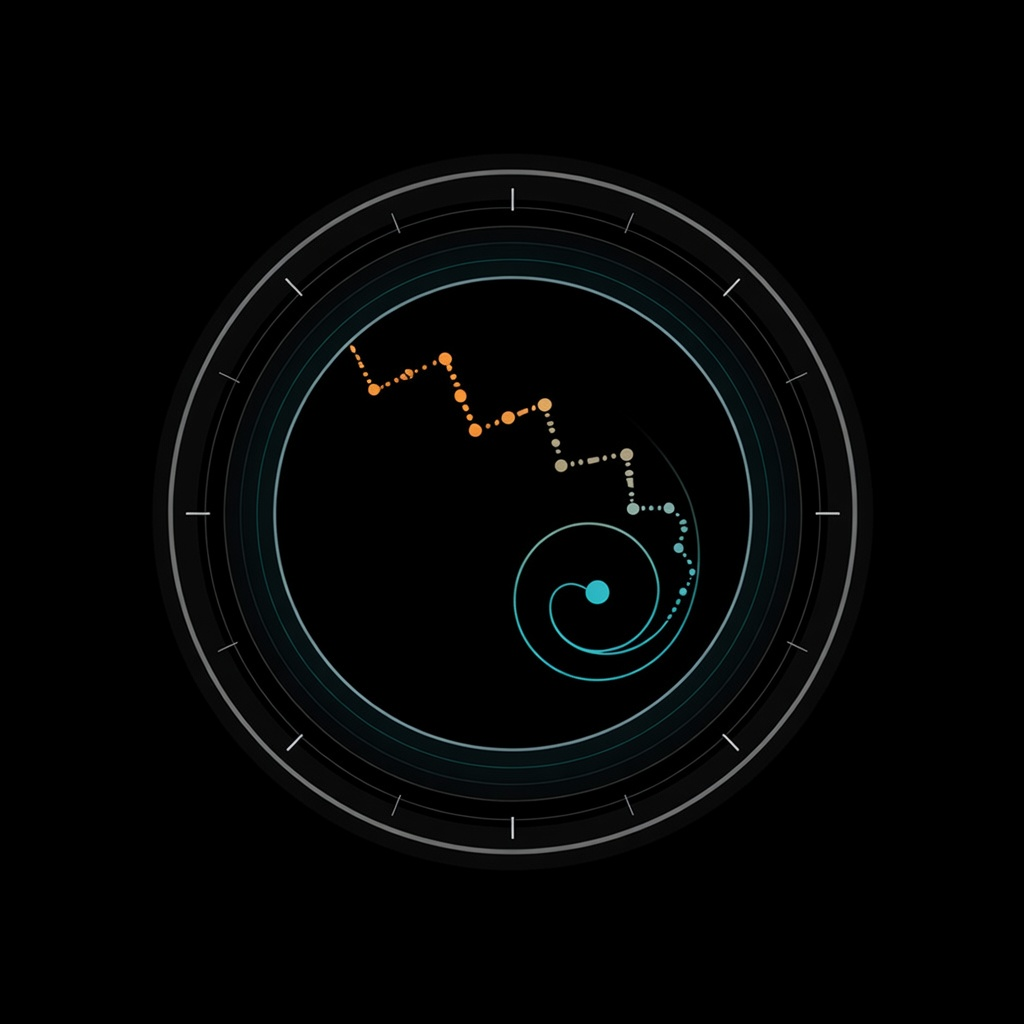
mod mcmc_sa
- module mcmc_sa
MCMC-style simulated annealing with Gelman-Rubin convergence termination at each epoch.
Classical SA runs a fixed number of inner-loop steps
Kper temperature epoch. MCMC tradition runs until a between-chain convergence diagnostic crosses a threshold (typically Rhat < 1.1 across M >= 2 chains). The two are mathematically identical at fixed temperature – both implement a Metropolis-Hastings kernel with Boltzmann-Gibbs stationary distribution – but differ in loop control. This module ships the MCMC-style point of the typed algebra.This is the same fixed-temperature kernel used by parallel tempering; only the epoch stopping rule changes.
Structs and Unions
- struct GelmanRubin
Gelman-Rubin convergence diagnostic on a multi-chain trace.
For
Mchains of lengthN, this computes the standard chain means, within-chain variance, between-chain variance, pooled variance estimate, and Rhat = sqrt(Var / W).M >= 2 and N >= 2 are required; otherwise returns
f64::INFINITY. We track per-coordinate Rhat and return the maximum across coords; SA practice converges on the worst-mixing coordinate.Implementations
- impl GelmanRubin
Functions
- fn compute(traces: &[Vec<Vec<f64>>]) -> f64
Computes max-per-coordinate Rhat from a
(n_chains, n_draws, dim)view passed as a flat slice with row-major(chain, draw, dim)layout.
- struct MultiChainResult
Aggregated multi-chain history: one
Historyper chain plus the per-epoch Rhat trace.- epoch_rhat: Vec<f64>
Final Rhat at each epoch.
- epoch_steps: Vec<usize>
Inner-loop step count used at each epoch (varies; the MCMC payoff).
- struct MultiChainSampler<S: Sampler<f64>>
MCMC-style multi-chain SA driver.
At each epoch, run
k_minsteps per chain, compute Rhat, advance when it is below the threshold, otherwise runk_checkmore steps and recheck untilk_maxcaps the epoch.When
sparse_straggler_only = true, the additional batches step only the chains farthest from the pooled mean (the “stragglers”) rather than all chains. This is the skip-connection design: chains that have already mixed get skipped on subsequent batches, reducing total fevals at the cost of a slightly slower Rhat computation (the converged chains’ history grows more slowly so the pooled mean estimate is noisier on early checks). For Rastrigin 5D this reduces fevals by ~30 percent at unchanged variance reduction.- sampler: S
The per-chain sampler (shared across chains; each chain owns its State and RNG).
- n_chains: usize
Number of chains.
- k_min: usize
Minimum inner-loop steps per epoch before checking Rhat.
- k_check: usize
Step batch size between Rhat checks after
k_min.
- k_max: usize
Hard cap on inner-loop steps per epoch.
- rhat_threshold: f64
Convergence threshold (typical: 1.1).
- sparse_straggler_only: bool
Skip-connection mode: in phase 2, step only the
straggler_top_kchains farthest from the pooled mean instead of all chains.
- straggler_top_k: usize
How many stragglers to step per phase-2 batch when sparse mode is on. Setting to 0 falls back to full multi-chain stepping.
Implementations
- impl<S: Sampler<f64>> MultiChainSampler<S>
Functions
- fn run(&self, cooling: &dyn crate::cool::Cooling<f64>, n_epochs: usize, seed: u64) -> MultiChainResult
Drives the multi-chain MCMC-SA loop. Each chain’s RNG is seeded from
seed.wrapping_add(chain_idx as u64)for reproducibility.