mod neus_bridge
- module neus_bridge
Umbrella bridges between two catalog minima in descriptor space. Nonequilibrium-umbrella bridge machinery between two known minima.
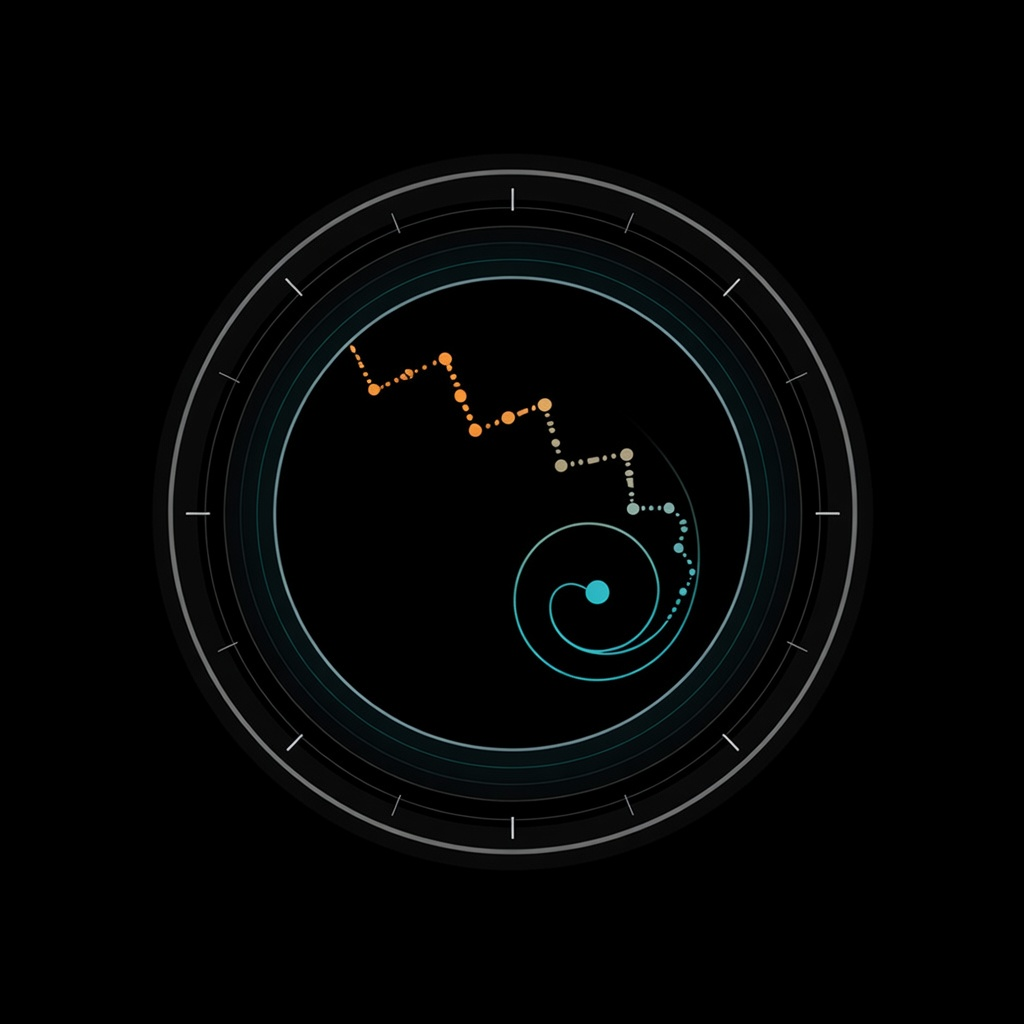
A bridge is a string of images through descriptor space between two validated minima, tiling the channel with Voronoi regions that each receive their own segment budget. Confined walkers record attempted exits as crossings; weights transfer on every attempt and their fixed point is flux balance; the forward crossing fractions compose into a committor surrogate along the string. The construction follows nonequilibrium umbrella sampling in its string form and direct forward flux sampling in its staging, with the descriptor playing the order parameter, so the machinery is engine-agnostic: any segment runner that propagates and reports descriptors drives it.
This module is pure state and arithmetic: no wire, no engine, no randomness beyond a caller-supplied draw for entry selection.
Enums
- enum BridgeError
Invalid bridge construction or update input.
- TooFewImages
A string needs at least three images: two endpoints and a channel.
- DimensionMismatch
Endpoint descriptors must share one dimension.
- DegenerateChord
Endpoints must be separated to define a chord.
- RegionOutOfRange
A referenced region does not exist.
- InvalidTransfer
Weight transfer fraction must lie in (0, 1).
Structs and Unions
- struct BridgeString
A string of images through descriptor space with fixed endpoints.
Implementations
- impl BridgeString
Functions
- fn assign(&self, descriptor: &Array1<f64>) -> usize
The region owning a descriptor: the nearest image.
- fn chord(a: &Array1<f64>, b: &Array1<f64>, k: usize) -> Result<Self, BridgeError>
The chord between two endpoint descriptors, sampled at
k + 1images inclusive of both endpoints.
- fn chord_distance(&self, descriptor: &Array1<f64>) -> f64
Distance from a descriptor to the endpoint chord segment.
Membership in the bridge tube is a cheap test against this distance; points outside the tube belong to ordinary search space rather than to any region.
- fn images(&self) -> &[Array1<f64>]
Images in order from the A endpoint to the B endpoint.
- fn regions(&self) -> usize
Number of regions, one per image.
- fn update(&mut self, means: &[Option<Array1<f64>>], alpha: f64) -> f64
Move interior images toward observed walker means, smooth, and reparametrize to equal arc length. Endpoints never move: they are the validated minima the bridge connects. Returns the largest image displacement, the caller’s convergence signal.
- struct EntryLists
Stored entry configurations for each region.
Implementations
- impl EntryLists
Functions
- fn draw(&self, region: usize, draw: u64) -> Option<&Array1<f64>>
Draw an entry for a region by a caller-supplied index draw.
- fn is_empty(&self, region: usize) -> bool
Whether a region has no stored entry.
- fn len(&self, region: usize) -> usize
Number of stored entries for a region.
- fn new(regions: usize, capacity: usize) -> Self
Lists for
regions, each holding at mostcapacityentries.
- fn push(&mut self, region: usize, state: Array1<f64>) -> Result<(), BridgeError>
Record an entry configuration for a region, evicting the oldest beyond capacity.
- struct WeightLedger
Region weights under the nonequilibrium umbrella update.
Implementations
- impl WeightLedger
Functions
- fn committor_surrogate(&self) -> Vec<f64>
Committor surrogate along the string: the probability that a segment from the A side reaches image
kbefore returning, as the running product of forward fractions.
- fn crossing(&mut self, from: usize, to: usize) -> Result<(), BridgeError>
Record an attempted exit and transfer weight toward its target.
The update is Dickson and Dinner’s: weight moves with attempted flux, and its fixed point balances flux in and out of every region. Total weight is conserved exactly.
- fn flux_balance_residual(&self) -> f64
How far the weights sit from flux balance: the largest absolute mismatch between weighted flux in and out of a region, with the observed crossing counts normalized to rates so the residual measures the weights rather than the length of the observation. Zero at the fixed point.
- fn forward_fractions(&self) -> Vec<f64>
Forward crossing fraction out of each region toward its successor.
- fn launch(&mut self, region: usize) -> Result<(), BridgeError>
Record a launched segment in a region.
- fn launches(&self, region: usize) -> u64
Segments launched in a region so far.
- fn new(regions: usize, s: f64) -> Result<Self, BridgeError>
Uniform weights over
regions, transferring fractionson each attempted exit.
- fn weights(&self) -> &[f64]
Current region weights, summing to one.